Justine Lipuma, the Grasse microbiologist who wants to replace pesticides with fungi
Co-founder of Mycophyto in 2017, she closed a €16m funding round in January. Her start-up is opening a subsidiary in Morocco, the first step in its international expansion.
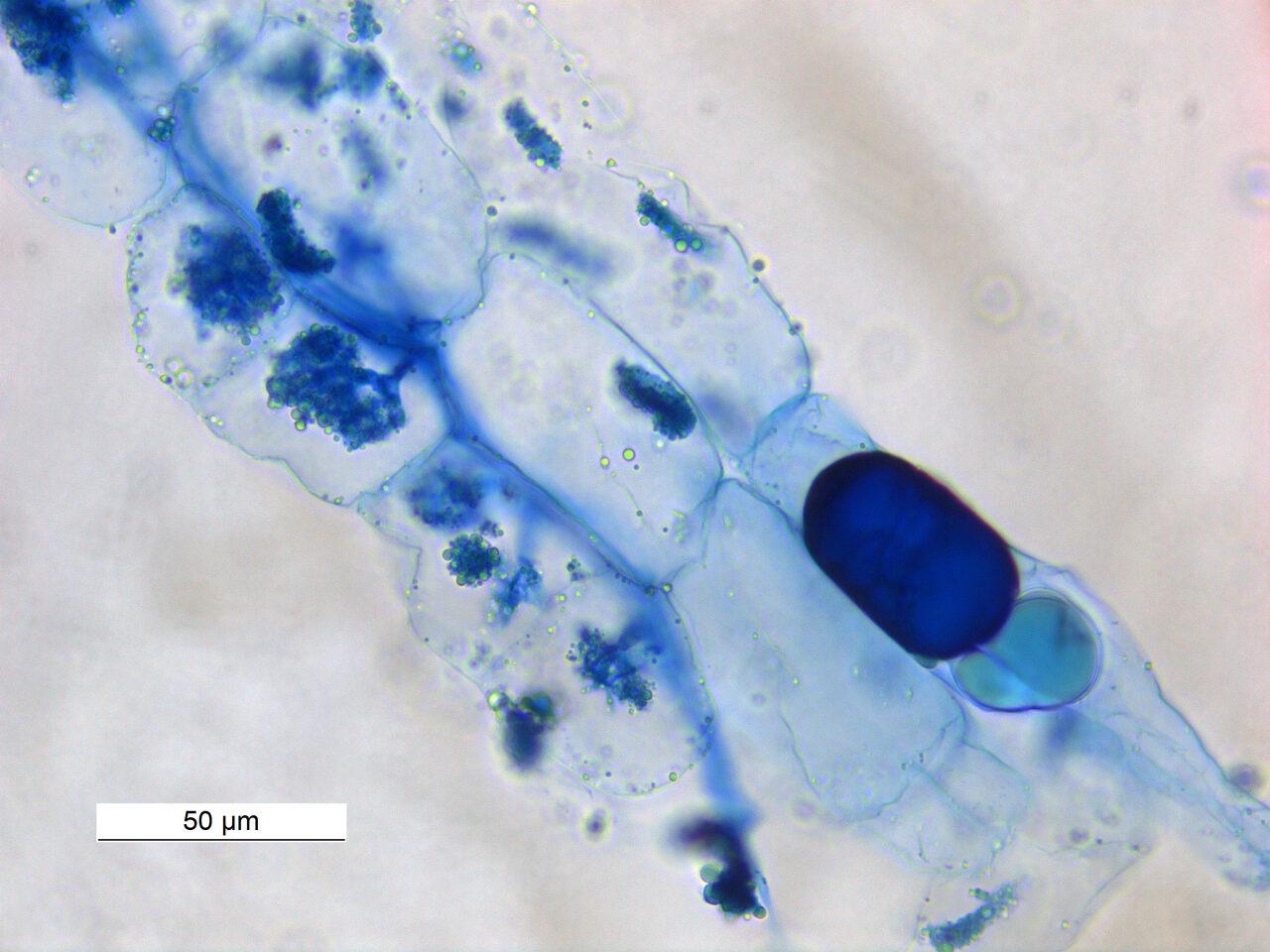
Beneath our feet, microscopic fungi live in symbiosis with plant roots and help them feed. It is on this alliance, known as mycorrhiza, that Justine Lipuma has built Mycophyto. The Grasse start-up is opening a subsidiary in Morocco, Le Journal des Entreprises reported. It is the first concrete step in an international expansion that is also targeting Spain, Côte d’Ivoire and the Benelux countries.
The expansion was made possible by a €16m Series A round completed in January, the largest in the company’s history. Investors include Innovacom, BNP Paribas and the DeepTech 2030 fund managed by Bpifrance, the French public investment bank, alongside CDG Invest, Noshaq and existing shareholders, among them Région Sud Investissement and Crédit Agricole. A strategic shareholder joined afterwards, according to CFNews.
Justine Lipuma, who holds a doctorate in microbiology, founded Mycophyto in 2017 in Sophia Antipolis with Christine Poncet, an agronomist. The company is a spin-off from the laboratories of INRAE, the French national research institute for agriculture, food and the environment, and Université Côte d’Azur. Its principle: producing biological solutions based on mycorrhizal fungi to strengthen crops and reduce the use of fertilisers and pesticides.
Its early days were those of a typical research start-up. Mycophyto won the i-Lab innovation competition, then raised €1.4m in 2019 to offer a biological alternative to pesticides. A further round of just over €4m followed. In 2022 the company had 19 employees; it now has around thirty, in Grasse.
The challenge is industrial. Producing live fungi in large quantities cannot be improvised, and its founder had already said she was preparing the “mass industrialisation” of its mycorrhizal fungi.
Justine Lipuma has also made her mark on the regional ecosystem. She joined the governing body of French Tech Côte d’Azur, alongside other women business leaders from Sophia Antipolis. At the end of October 2024 she was part of the delegation of entrepreneurs accompanying the French president on his state visit to Morocco, the country where Mycophyto is now setting up.
The bet has yet to be proven at scale, though. Biological solutions still have to show, field after field, that they deliver against conventional products. Producing living fungi industrially is a technical challenge few have mastered. And a €16m round creates pressure for quick results: opening several countries at once is a sign of ambition, but also a risk of overstretch for a company of around thirty staff.
Agriculture is looking for ways to cut chemicals without losing yields. Mycophyto is betting on soil biology, and its chief executive on the idea that a start-up born in a Riviera laboratory can become an international player in agriculture.
Sources
- La deeptech Mycophyto ouvre une filiale au Maroc (Le Journal des Entreprises)
- La deeptech Mycophyto finalise une levée de fonds de 16 millions d'euros (Le Journal des Entreprises)
- Mycophyto closes €16 million financing round (FreshPlaza)
- Un actionnaire stratégique germe chez Mycophyto (CFNews)
- Mycophyto : « Nous préparons l'industrialisation de masse de nos champignons mycorhiziens » (Le Journal des Entreprises)
- Mycophyto et Justine Lipuma en voyage présidentiel au Maroc (Le Journal des Entreprises)
- La start-up Mycophyto lève 1,4 million d'euros pour proposer une alternative biologique aux pesticides (FrenchWeb)
- Mycophyto lauréate du 21e concours d'innovation i-Lab (Le Journal des Entreprises)